Reading the transposition analysis
What the numbers describe
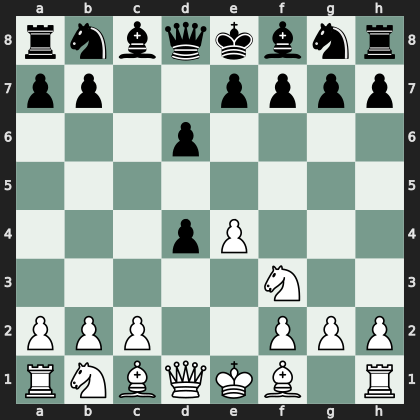
The explorer measures White decision positions after Black’s moves 3–10 in two separate public cohorts. A board’s frequency is its distinct-game count divided by the eligible games in the selected cohort, recorded opening family, or lens. These samples do not estimate an individual player’s encounter rate.
A recurring board occurs in at least two games. A transposing board has at least two distinct acyclic arrival prefixes. Each game contributes its earliest eligible visit to a board. Repetition prefixes contribute to frequency but do not increase the acyclic route count.
Alternative-route share reports the proportion of acyclic position games outside the leading arrival route. A board reached through eight routes may still have almost all games following one route. Compare frequency, route count, and route balance together. The route cards use all position games as their denominator; the alternative-route metric uses acyclic games and labels that distinction.
Coverage is the union of games encountering one or more selected positions. Adding frequencies would count overlapping games repeatedly. The coverage curve uses the existing frequency ranking, with the number of additional games supplied by each next board. It does not optimize a curriculum or establish learning benefits.
Public fianchetto lenses
Choose a public lens in the opening-family selector. These lenses use played moves within the first 20 plies, independent of recorded opening labels:
| Lens | Required moves, in addition to first White move d4 |
|---|---|
| 1.d4 with g3 | White plays g2g3 |
| Catalan-style fianchetto | White plays c2c4, g2g3, f1g2; Black plays e7e6 and d7d5 |
| King's Indian fianchetto | White plays c2c4, g2g3, f1g2; Black plays g8f6, g7g6, f8g7 and d7d6 |
These are versioned move-sequence facets, not exhaustive opening classifications. Their denominators count only matching games. The explorer includes positions before g3 as well as after it; the board detail reports how many arrivals have already played g3. A possible next g3 move is a separate observed continuation. No personal repertoire or account history contributes to these views.
Opening labels and route comparisons
Family and ECO labels describe recorded games, sometimes using moves played after the selected board. The detail panel counts all known families and ECO codes; the five displayed family/ECO combinations are examples, not the complete list. Unknown-family games are reported separately. Shared labels can reflect taxonomy choices and are not evidence of strategic equivalence.
The route diagram joins the top three acyclic arrival orders at the displayed board. Other acyclic arrivals and repetition-prefix games are counted separately. The canonical key keeps pieces, side to move, castling rights, and legal en passant. It does not merge boards with different legal rights, and it does not retain the same draw-counter or repetition-history context for every contributing game.
Sources, provenance, and limits
The checked corpus has 1,042,346 selected games: 240,086 in the curated November 2025 Elite reference and 802,260 across nine ordered first-day public archive prefixes. Both-player ratings, minimum game length, marked bots and time-control exclusions are documented in the learning guide. Full source files and derived visits remain local. Published reports bind their source snapshot, configuration, implementation, and verification hashes.
The charts use a bounded White opening window. The depth comparison covers all openings in both cohorts, regardless of the explorer’s family or lens filter. The scatter shows only published ranked positions. Observed continuations are choices, not recommendations; neither frequency nor outcomes establish move quality.
See Metrics & data, the versioned contract, the checked report, and publication evidence.
Learning comes next
The separate Opening learning page contains the illustrative board, research rationale, lesson and drill design, and evaluation proposal. Strategic lesson authoring, a learning experiment, public outcome aggregation, and engine review remain separate extensions.
Compare a local export
Analyze games compares selected White games from local Chess.com/Lichess PGNs with these published study boards. The personal denominator includes short games by default and stays separate from the public cohorts.